1 July 2026
Learn more about how and why we use regranting in our work.
William Grant Foundation
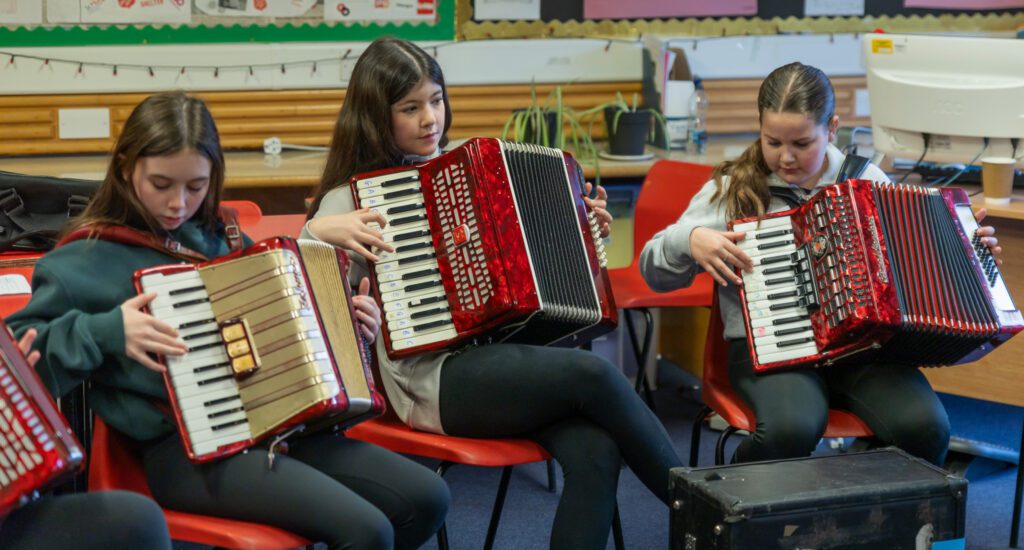
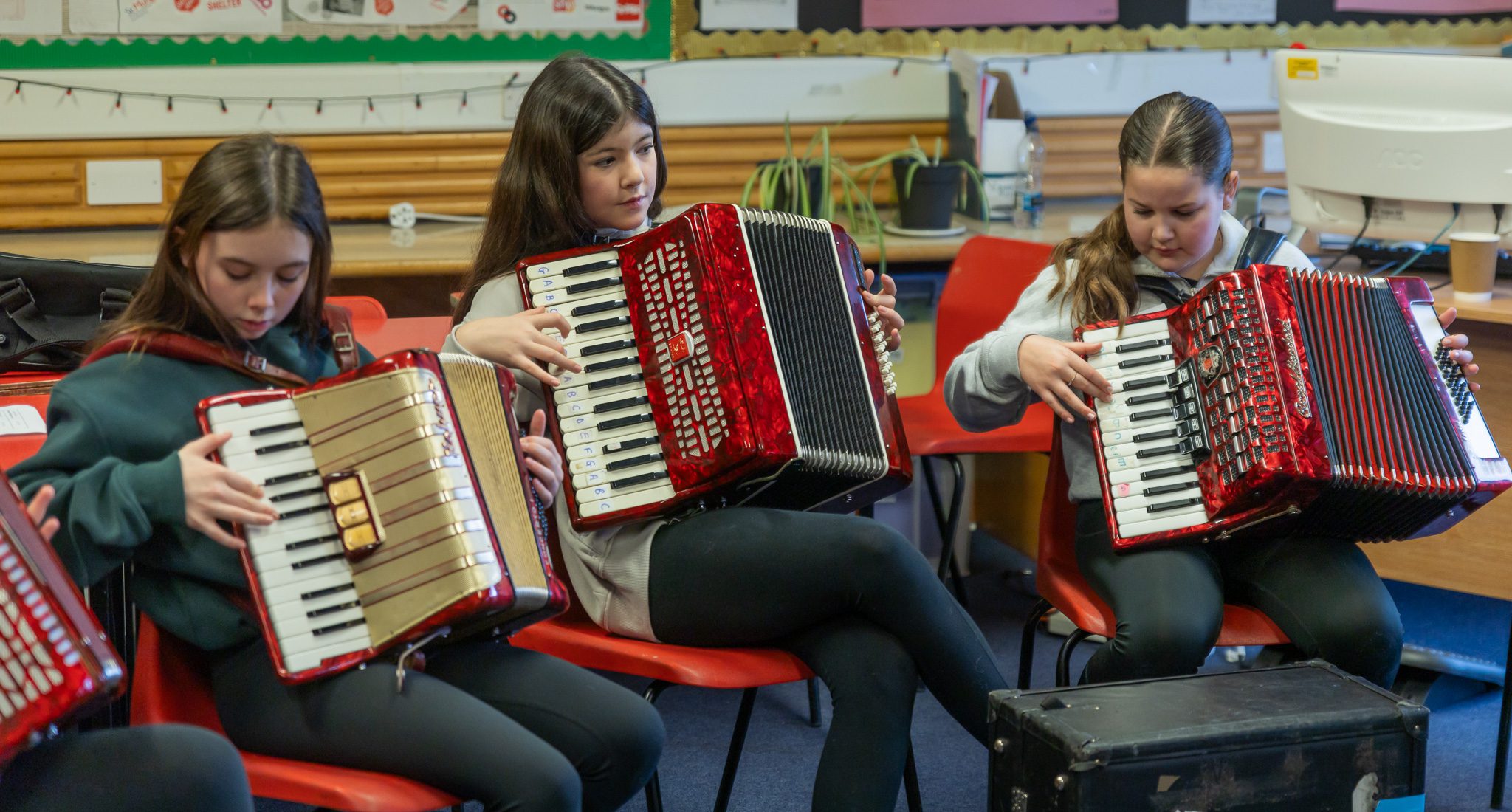
Photo: Fèisean nan Gàidheal by Rae McKenzie
There’s a well-known phrase: if you want to go fast, go alone; if you want to go far, go together.
Regranting – funding an organisation to make grants to others – is one way we put this into practice. It’s an established part of our work, with around 9% of our funding distributed in this way since 2020.
At first glance, regranting can feel removed from traditional grant-making – where funders make decisions and manage relationships directly. But in practice, it’s sometimes the most effective way to get funding to where it is needed.
What regranting makes possible
Distributing funds through another grant-maker means we can benefit from their…
- profile and networks – which allow them to reach people and organisations we’d like to target but might struggle to access directly – especially given that we don’t run an open application process
- specialist expertise – partners often bring deep knowledge of a field, along with the systems and skills to assess proposals and support those they fund, which we may not have in-house
- trust and credibility in their field or community – which means they’re more likely to have honest relationships with applicants and grantees that lead to more appropriate support
Sometimes, earmarking a portion of funds to be allocated by another grant-maker can allow for testing new approaches and being bold – creating space to invest in ideas that are earlier-stage or carry more uncertainty.
And working alongside other funders, pooling resources and contributing to shared efforts rather than working in isolation, can reduce duplication, amplify impact and share learning more widely.
How we use regranting
The examples below highlight a range of regranting partnerships, some of which have developed over many years.
Example 1: Exploring new futures for heritage buildings
Under our Natural and Built Environment theme, we’ve awarded over £700k to the Architectural Heritage Fund (AHF) since 2020 to distribute through their Tailored Support Fund – an open programme supporting early-stage community-led heritage projects in Scotland.
Through this partnership, our funding for community-led initiatives to retain and develop valued local buildings and spaces:
- reaches more organisations through smaller grants than we would normally administer ourselves
- reaches a wider and more diverse group of organisations, from across the country
- is combined with specialist advice from the AHF team
- can support early-stage issues, such as repairs or ownership, that are often harder to fund
We also learn from AHF’s approach, which helps inform our own practice and, in some cases, AHF introduces us to organisations we choose to fund directly.
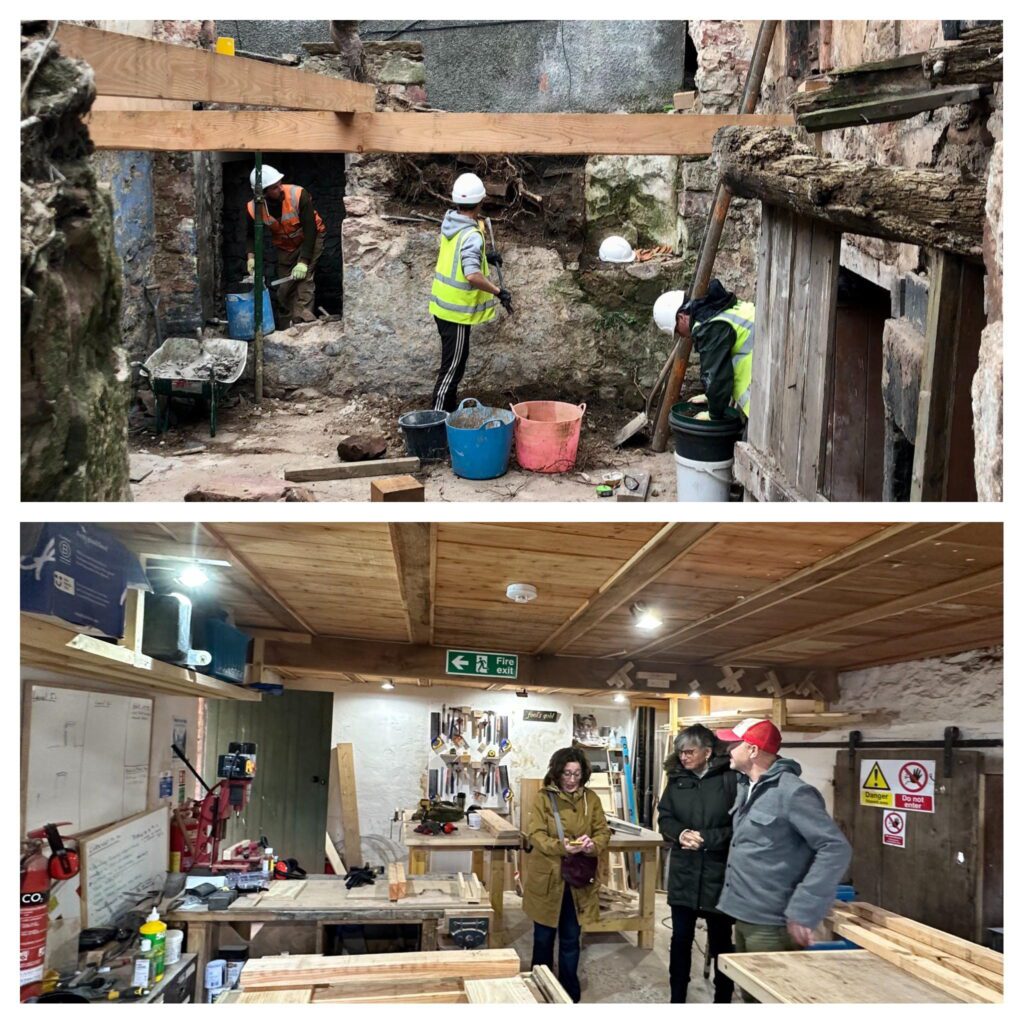
Following indirect support via AHF’s Tailored Support Fund, we directly contributed to the costs of The Ridge’s redevelopment of Black Bull Close (in Dunbar) through our Community Assets funding.
By streaming some of our independent funding through AHF alongside the public sector funds they manage, we also help strengthen the wider funding landscape.
A particular value of the partnership is that our flexible funding allows AHF to respond to needs that fall outside the criteria for their more restricted public sector funding streams, making it easier for organisations to access the support they need in one place.
Example 2: Supporting opportunities for young people in the arts
Under our Scottish Culture and Heritage theme, we have developed partnerships with two organisations that help young people engage with cultural opportunities.
At the grassroots, Fèisean nan Gàidheal redistributes some of our funding to locally-run Fèisean events and summer schools across Scotland, which give more children the chance to participate in traditional and Gaelic arts.
And for talented young people looking to overcome financial barriers to develop or deepen a career as a performer, artist or maker, Dewar Arts Awards use our funding to increase the number of grants they make to individuals to help with the costs of education, training and equipment.
We’re supporting the Dewar Arts Awards with a grant for £99,000, to be distributed between 2025 and 2028.

Regranting through this partner allows us to support individuals in a way we could not easily do ourselves, drawing on their established networks to reach young people, a tailored process for applications, and expert trustees and advisors who can advise on the best opportunities to support the most promising candidates.
Example 3: Backing innovative approaches to marine conservation
As a contributor to Sea-Changers’ Innovation Fund, our funding is supporting organisations testing new approaches to marine conservation.
By working with a partner closer to the field and channelling funding from a range of sources alongside ours, we can learn about a broader range of ideas than we could discover ourselves.
And we can proactively commit a tranche of our funds to less proven work, confident that Sea-Changers will be making informed judgements about risk and potential impact on our behalf.
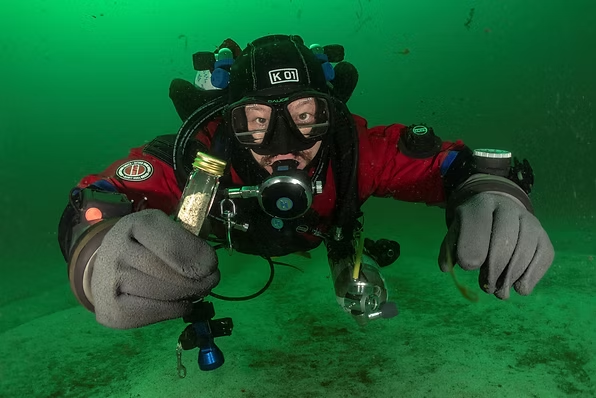
We’ve contributed around £56,000 to the Sea-Changers Innovation Fund since 2022 to specifically support applications that benefit Scotland.
Photo from Sea-Changers’ website.
Example 4: Supporting action to realise and defend human rights
As well as bilateral regranting relationships with funders who share some of our thematic interests, we sometimes participate in more collaborative pooled funds, where several funders join forces to create a single funding pot to address a cross-cutting or strategic issue, often with a focus on learning.
We’re currently one of eight partners in the Independent Human Rights Fund for Scotland (IHRFS). For this pooled fund, Corra Foundation acts as the grant-maker, distributing funds to support action to realise and defend human rights in Scotland and using rights-based approaches to tackle issues affecting people’s daily lives.
With our contribution of £150k, we could have funded a small number of rights-focused organisations or projects ourselves. But by joining a pooled fund of £1.25 million, we’re part of something larger.
We’re able to collaborate on a single national programme, to learn with and from a broader range of funded organisations alongside our peers, and work together to ensure that learning is accessible to the wider sector.
And, in this case, regranting allowed the decisions about funding to sit closer to communities affected by rights issues – informing decisions and helping to address imbalances in who holds power in funding relationships.
A specially recruited panel made up of people with relevant lived, learned and professional experience were supported by Corra Foundation to review applications and select the grant recipients.
Read reflections from an IHRFS panel member.

What we learn from regranting
Our strategy is centred on working with the right partners, using our resources to add value to their work, and building knowledge and insight through each relationship. Regranting is part of this approach, not separate from it.
A focus on continuous learning underpins this grant-making cycle, as we aim to become a more effective funder in both what we fund and how we work.
Regranting gives us insight into how other funders make decisions and how they support charities. It also helps us stay connected to changing needs in the fields we support, particularly where partners are working at a scale or depth we could not replicate ourselves.
Upholding shared principles
When we ask other funders to regrant on our behalf, we’re one step removed from both decision-making and from the people receiving funding. This means placing our trust in partners’ judgement and being comfortable with less direct visibility.
It relies on strong relationships, clear roles, and openness about how decisions are made. We’re committed to open and trusting grant-making, so it is important to us to consider whether partners’ processes reflect similar principles. While decisions sit with them, the funding – and the responsibility for its impact – remains connected to us.
We see these kinds of partnership as an opportunity not only to align with good practice, but to encourage it more widely.
Final reflections
Regranting helps us extend our reach, draw on expertise we do not have, be more open to risk, and de-clutter the funding landscape. It also gives us a different perspective on grant-making, helping us to keep learning and play a part in improving how funding works overall.
At its best, regranting offers us a practical and thoughtful way to go further in our grant-making by working together with others who share our vision.