28 October 2026
Explore insights from funded partners and our reflections on what we’ve learned through our bursary pilot for organisational strengthening.
Mhairi Reid
Photo: Space @ Broomhouse
In April, we shared early insights from our bursary grants pilot focused on helping to strengthen the organisations we fund. At the time, we were just beginning to explore what a small additional amount of money restricted for organisational strengthening could achieve, when funded partners could choose what to use it for.
Since then, 12 organisations have received bursaries of up to £5,000 on top of their main grants from us. They’ve used this to invest in areas such as staff development, strategic planning, evaluation and learning, communications, digital infrastructure, governance and income generation.
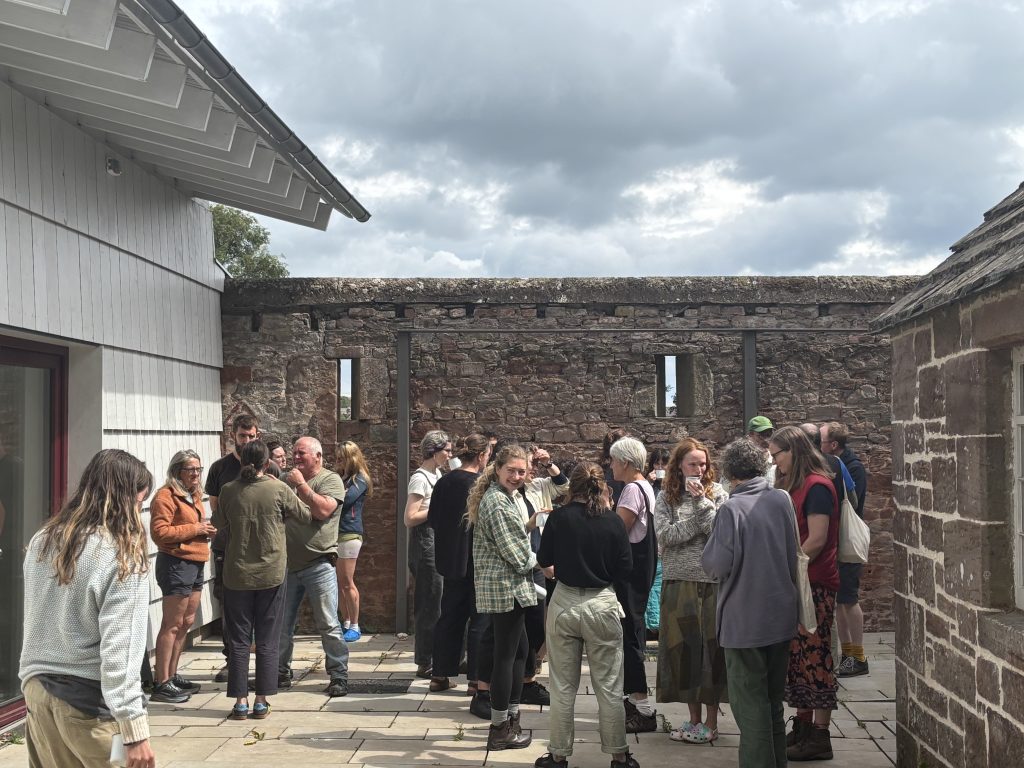
As well as receiving feedback from them individually, we brought bursary recipients together in August for a peer learning session to reflect on their experiences and share insights with one another.
The pilot has shown how relatively small investments can create meaningful change when organisations have the agency, space and support to focus on their own priorities for development.
What organisations told us
While every bursary was used differently, several common themes emerged from our conversations and the peer learning session. The reflections below capture some of the insights that were shared.
Organisational strengthening is important, but easy to postpone
A common theme was that organisations often know what they need to work on internally, but addressing delivery pressures usually takes priority.
“There were things we knew we needed to do; several things we’d been frustrated about not getting to for years.”
For some, the ring-fenced bursary created an opportunity to tackle long-standing challenges that had never quite risen to the top of the to-do list. For others, it created space to step back and think strategically about where a small investment could make the greatest difference.
Several organisations told us that having a defined piece of work, supported by dedicated funding, helped them focus their attention and make progress in ways that might otherwise have been delayed.
Photo: Young Sea Changers Scotland by Rosa Payne
The process matters
While bursaries were awarded for specific purposes, many organisations described benefits that extended well beyond the original brief. One organisation described how evaluation and learning support led to stronger relationships and collaboration across teams as a result of the way it bought different parts of the organisation together.
Others reflected that training, facilitation and consultancy support were particularly useful when they intentionally took a capacity-building approach, helping people develop skills, confidence and understanding that left them better able to do things themselves in future.
“The learning and the transformation in the team, and for me, has actually been much greater than I thought it was… Having the bursary pushed me to learn stuff I never wanted to learn, but that I needed to learn.“
Trust and flexibility make a difference
Participants repeatedly highlighted the importance of being trusted to decide how best to use the bursary.
They valued being able to choose their own providers, adapt plans as learning emerged and focus on what mattered most to their organisation. Several partners also noted that organisational development rarely follows a neat, linear plan, so our flexibility around timing and delivery was particularly helpful.
“We needed to pause every so often because of other work commitments but that has actually been helpful in allowing us to develop our thinking. The Foundation’s understanding of this is great.“
Photo: Argyll Hope Spot
Organisations value space to reflect with peers
The peer learning session highlighted that organisational development challenges are rarely unique.
Participants valued the opportunity to hear how others were approaching similar issues and reflected that dedicated space for these conversations can be valuable in its own right. For some, hearing that others faced similar challenges helped normalise issues that are often dealt with behind the scenes.
What we’ve learned as a funder
The pilot has reinforced the importance of the relationships, trust and openness that already underpin our grant-making.
One aspect of the bursary experience that organisations particularly valued was that when we approached them about the opportunity our conversations started from an existing understanding of their work.
At the same time, the pilot reminded us that, while our existing knowledge helped us begin the conversation in a more informed place, it didn’t mean we already knew what support was needed.
Open conversations often surfaced more important opportunities than those we first had in mind, reinforcing the value of approaching discussions with curiosity rather than assumptions.
Another key learning is that organisational strengthening itself requires organisational capacity.
Even when a bursary funds consultancy, training or specialist support, organisations still need time and resource to engage with the work, implement changes and sustain progress afterwards.
The long-term value of organisational development depends not only on getting started, but also on what happens next. Most of our main grants are flexible and therefore provide more scope to embed outcomes than restricted project funding. However, even with flexible funding, we know that organisations can find it difficult to prioritise investing in themselves.
On a more general level, the pilot increased our awareness of how difficult it can be for organisations to secure flexible cash for this kind of activity, where they can determine their own priorities and choose the support that best meets their needs, rather than be referred to a prescribed consultancy or training provider/programme.
What’s next
Strengthening an organisation is not a one-off exercise. It’s an ongoing process of adapting, learning and investing in people, systems, relationships and structures.
Our experience suggests that relatively small, targeted investments can help organisations make progress on organisational development priorities. While long-term change depends on many factors, creating dedicated space and resource for this work can be an important starting point.
The pilot has given us confidence that organisational strengthening bursaries have an important role to play within our Funder Plus offer.
We’ll continue making bursary grants during the coming year and will keep learning alongside the organisations involved. We want to deepen our understanding of what works, refine the approach where needed and continue sharing learning with others interested in supporting organisational strengthening.
A few reflections for funders
Our experience so far suggests:
- keep the process proportionate and low bureaucracy
- trust organisations to identify priorities that matter to them
- create space for conversation rather than relying solely on written applications
- focus on opportunities to build capability, not just funding outputs and deliverables
- recognise that organisational strengthening processes consume time and internal capacity
- consider what the organisation needs for the outcome to be implemented and sustained beyond the initial intervention
We’ve learned from reading lessons other funders have shared about their own Funder Plus work and would encourage continued sharing of learning so that others can build on what works.
Reflections for organisations considering this kind of support
Our conversations with bursary recipients suggest it may help to:
- focus on one important challenge rather than trying to solve everything at once
- think about implementation and sustainability from the outset
- recognise staff time as a real and valuable part of the investment
- choose providers who understand your context and will work alongside you
- see organisational development as part of creating impact, not separate from it.