2 March 2026
Discover how we’re using learning questions to help us pay attention to the unfolding nature of change.
Mhairi Reid

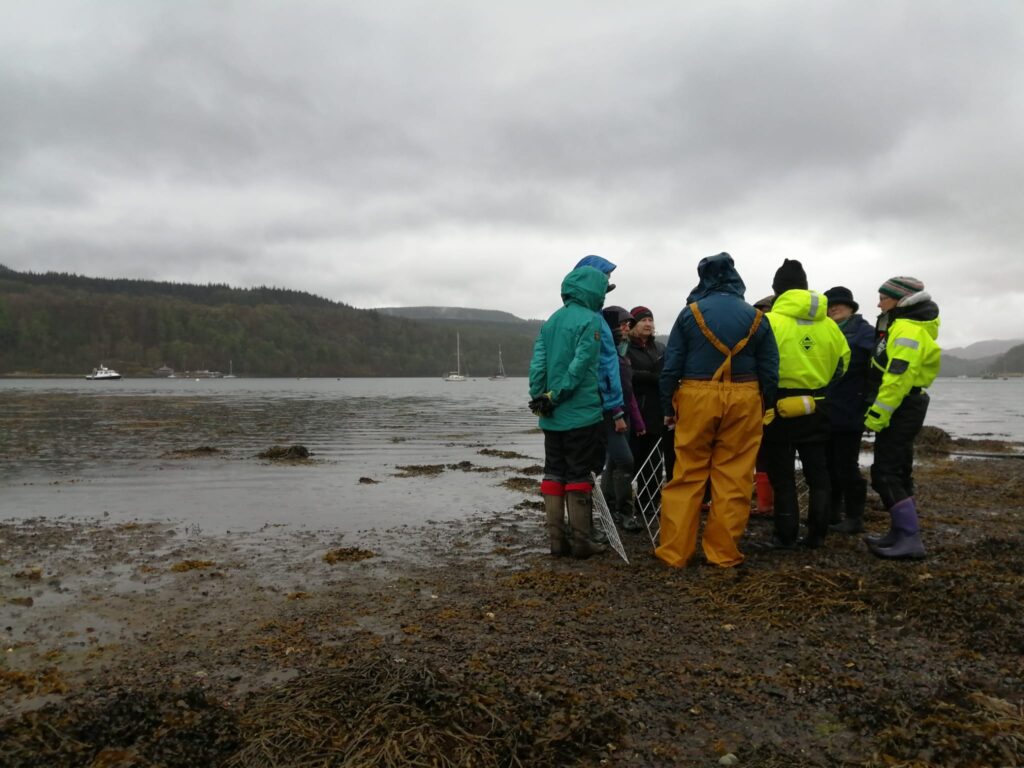
Photo: Sporting Memories Foundation Scotland
Understanding how change happens is an ongoing process of listening, noticing and reflecting. It unfolds in relationships, in conversations and in the decisions people make every day.
At the Foundation, we use a Theory of Change to describe how we think change happens, and the role we hope to play within it. It’s a tool to help us focus on where we add value: to the organisations we fund, the fields we work in, and to grant-making and philanthropy more widely.
And as we work with this tool, we’re trying to stay connected to the unfolding nature of change – looking for what’s emerging, not just what’s measurable. Learning questions have been a helpful companion in this.
What we mean by learning questions
A learning question is not designed to prove or validate anything. Rather than looking backwards at what has been achieved, learning questions help us learn forward. They prompt us to ask: What should we be paying attention to now, so that our work can evolve thoughtfully over time?
It’s a way of staying curious as we gather insights and try to improve our practice – a reminder to listen well and look for learning, without assuming we already know the answers. It also helps us pay closer attention to the topics that matter most right now, without getting lost in the soup of everything we could learn.
We’ve begun by exploring two learning questions that connect with our Theory of Change.
1. What becomes possible when our partners have flexible funding?
We aim to give grantees as much flexibility as possible regarding how they use the funds we give them. We often make our grants unrestricted – i.e. for general use by the charity to advance its mission. Flexible funding signals trust in organisations and offers space for stability, reflection and adaptation.
We want to understand this more deeply. For example:
- What kinds of possibilities does flexible funding create?
- How does it support organisations to stay mission-focused?
- Where does it contribute to internal resilience (wellbeing, planning, leadership, infrastructure, etc) – and where does it not?

This learning question helps us listen for subtleties – not just whether flexible funding makes a difference, but how it works, for whom, and in what circumstances.
2. Which aspects of our ways of working contribute to regenerative outcomes (including good endings)?
Regenerative thinking is an evolving idea for us. It involves building relationships that are nourishing, reciprocal and consciously working in ways that help create the conditions for people, organisations, fields and the wider ecosystem to thrive. This question helps us pay attention to the parts of our approach that feel genuinely supportive and the parts where we might unintentionally create pressure, complexity or distance.
For example, it prompts us to notice moments where endings or transitions (e.g. when we end a funding relationship with a charity) are handled in a way that leaves relationships not only intact, but strengthened, and to identify where our ways of working might enable deeper or more lasting benefits. This is only one aspect of what it means to work regeneratively, but it’s a helpful area for us to explore.
Using learning questions in our work
We gather insights in many places: conversations with grantees, informal team reflections, peer discussions, grantee feedback and more. Often, something is said or observed that makes us think: that feels important.
Keeping our learning questions in mind in these moments and reflecting on insights in regular team meetings or discussions with our giving groups helps us notice how the change we hope to contribute to shows up in practice – and where, or why, it doesn’t.
A clear example is emerging as we develop our funder plus offer (support we provide beyond the grant). As we talk with grantees and learn alongside our peers, we’ve been noticing how often organisations use funding for direct delivery, and how hard it is to prioritise investing in strengthening the organisation itself.
Even with flexible grants for core costs, many organisations still put themselves last – understandably, when demands for their services are increasing. This means internal strengthening, particularly investment in people, systems or leadership, can fall to the bottom of the list.
Several partners have described hesitation about using funding for inward‑facing work, even when it would ultimately strengthen their organisation and their contribution to the communities they serve. Read more in our ‘Looking under the bonnet’ blog.
By using our learning questions in our day-to-day work, we’ve been able to surface this pattern more clearly. Flexible funding is very important – but it isn’t a panacea for organisational resilience. It has helped us see that strengthening organisations may require complementary, restricted funding, and that how we offer that support matters as much as what we offer.
These insights are shaping the development of our funder plus offer. We’ve begun testing a small bursary pilot with some grantees, to explore whether a dedicated, light‑touch grant for organisational strengthening can support resilience in ways that feel regenerative and practical. We’ll share more about this in a future blog.
Learning together
Learning questions don’t lead to neat conclusions. For us, they are helping to hold open core areas of our Theory of Change and notice what’s unfolding within them.
We’d love to hear from others who are using, or interested in using, learning questions in their work – please get in touch via LinkedIn or email us if you’d like to chat.
Email us at foundation@wgrant.com.