29 September 2025
Restoring and protecting freshwater environments: Galloway Fisheries Trust.
William Grant Foundation
Key learnings:
- Rivers enrich our lives in many ways, from supporting our wellbeing to providing clean water, fertile soils and natural flood protection.
- Restoring natural river processes – like re-meandering channels and planting native trees – helps protect wildlife and build resilience to climate change.
- Partnerships and knowledge sharing with landowners, agencies and local communities are essential to protect and restore freshwater environments.
- Flexible funding enables organisations like GFT to respond to research, react to opportunities and challenges, and develop proposals that can attract future support.
Galloway Fisheries Trust (GFT) is a conservation charity working across the rivers, burns and lochs of Dumfries and Galloway. Their focus is simple but vital: to protect and restore freshwater environments so that fish, wildlife and people can all thrive. They do this through practical restoration projects, education and collaborative scientific research.
Through our Natural and Built Environment strand we are supporting GFT’s work along the River Bladnoch, which is designated a Special Area of Conservation because of its salmon population.
Why rivers matter
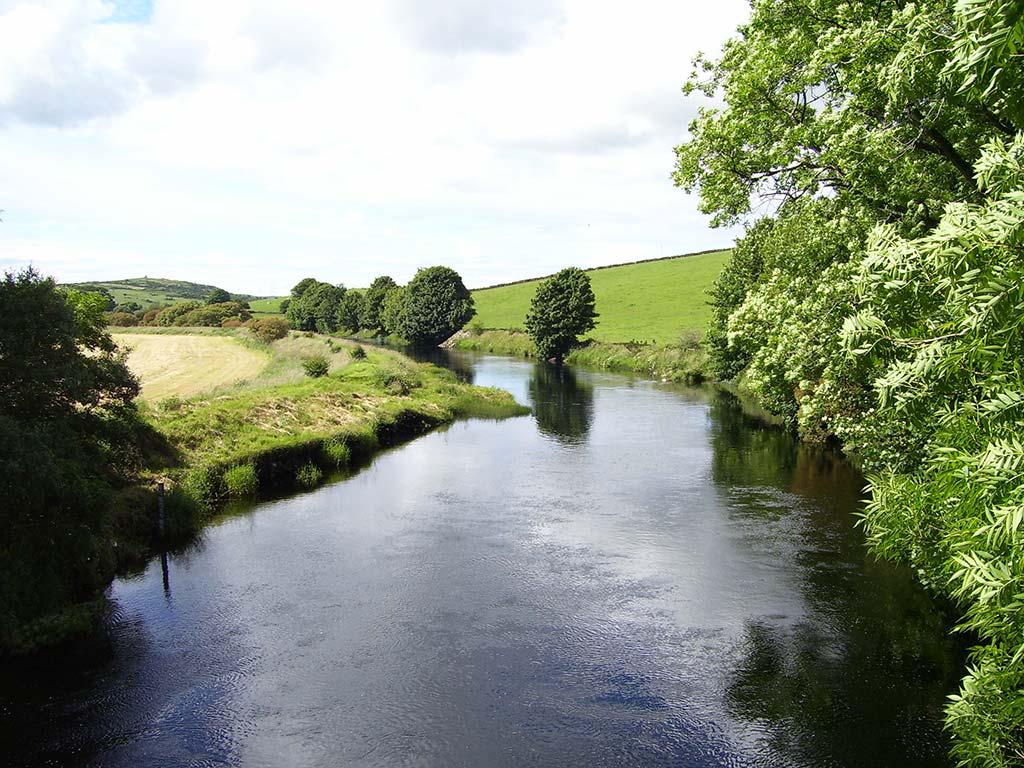
Rivers are at the heart of GFT’s work. For communities in the south-west of Scotland, rivers like the 21-mile long Bladnoch and its neighbours, the Cree and Urr, are more than watercourses on a map. They are places of memory and belonging, and the wildlife they support enriches our everyday lives. As Jamie Ribbens, Chief Executive at GFT, explains:
“The sound of running water is known to ease stress, and time spent near rivers and other freshwater habitats has proven benefits for mental health. But beyond this, rivers are also providers of clean water, fertile soils and flood protection. They are, in every sense, life-giving.”
Rivers shaped by a changing climate
GFT are learning and witnessing how climate change is stressing and reshaping our rivers: summers are getting hotter and drier, winters wetter and stormier. These changes mean that rivers are experiencing longer droughts, more damaging floods, and rising water temperatures that affect fish and other species.
On top of this, many meandering rivers have been straightened and deepened, their banks cleared of trees, and their surrounding wetlands drained. The effects of these changes make rivers less able to absorb and slow floodwater, reduce the shade needed to keep water cool and remove natural filters that improve water quality and promote more diverse habitats.
All of these things make rivers less resilient and less able to cope with today’s challenges.
River restoration in practice
Through research and experience, GFT have learned that restoring rivers often means undoing that past damage: putting bends back into straightened burns, replanting riverbanks with native trees, or reconnecting rivers with wetlands. These are natural solutions, but they bring multiple benefits: cooler, cleaner water; stronger banks that resist erosion; and new habitats for birds, insects and fish.
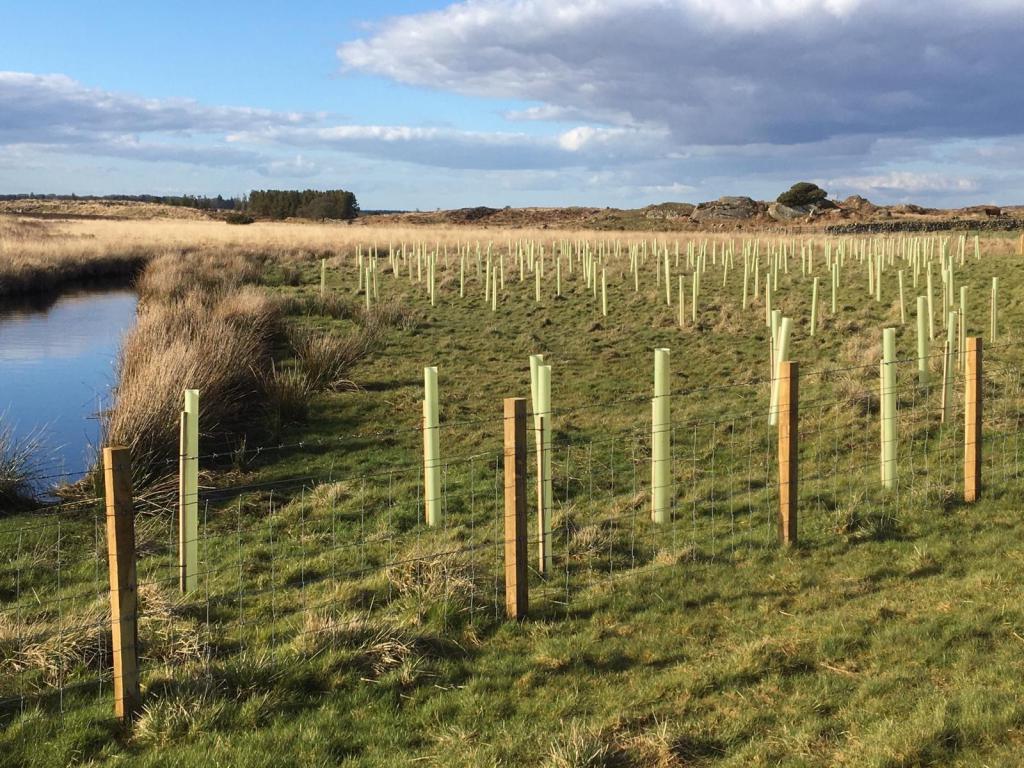
Tree planting within a new fenced area.
Photo: Galloway Fisheries Trust
Whilst a lot of this restoration work is about going back to established practice, other projects are pioneering new approaches. A good example is the River Bladnoch Scallop Shell Project investigating the potential use of waste scallop shells to reduce acidity in watercourses.
Whatever the approach, the key is to move away from short-term fixes and instead focus on processes that allow fish populations and wildlife to recover and sustain themselves. As Jamie says,
“Our belief is that if we can get the river right, then the species themselves should thrive.”
Collaboration is key
One of the biggest strengths of GFT is the way its small team of 10 works with others. The GFT doesn’t own land itself, but rivers don’t stop at property boundaries anyway and the team understands that what happens upstream affects everyone downstream. That’s why collaboration with landowners, local communities, other charities, and agencies like SEPA and NatureScot is so important.
Local school pupils meet a real Sparling.
Photo: Galloway Fisheries Trust
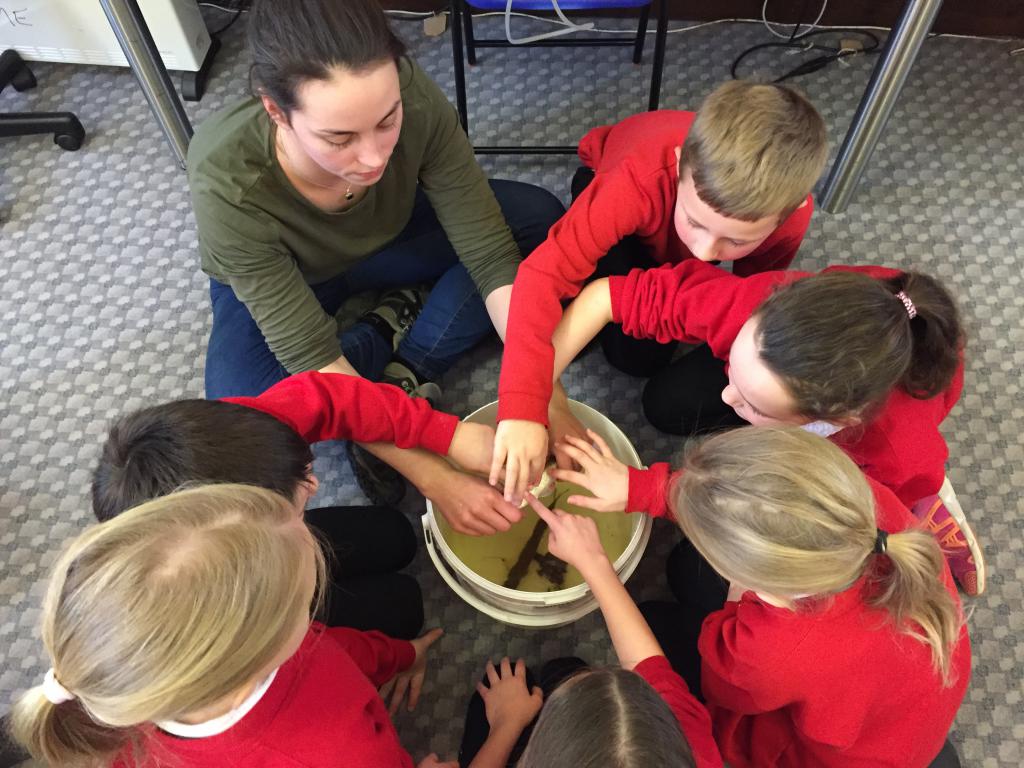
Building trust takes time, but it’s what makes large-scale restoration possible. GFT’s partnership work is also about sharing knowledge. The team run education programmes, share advice and build evidence through scientific research (such as monitoring water quality).
Data from its temperature loggers on the Bladnoch catchment contributes to Marine Scotland’s national monitoring network. The evidence collected helps shape local decisions while also feeding into Scotland-wide learning on how to protect rivers from climate change.
A flexible approach to funding
GFT has the flexibility to use our grant across a range of activities relating to the River Bladnoch project. This adaptability has been an important resource, helping GFT to grow the team, strengthen their organisational capacity and respond quickly to new opportunities. It has also supported the development of ideas and preparation of proposals to secure further funding.
As Jamie says:
“This grant has given us the opportunity to develop our thinking and plan for the long term as well as deliver immediate impact. That has been so valuable because it’s difficult to resource development work in this field.”
Looking ahead
It is clear to see that the work of GFT is full of hope. By replanting banks, creating wetlands, and cooling rivers with new shade, restoration work is showing that practical solutions exist.
With organisations like GFT leading the way, and with the support of people, communities and other partners, Scotland’s rivers can continue to provide life and inspiration for generations to come.
Read more about our Natural and Built Environment strand here.