Photo: The Ridge, Dunbar
Our vision for Scotland’s built environment is that it meets the needs of people and communities, helps address the climate emergency, and supports wellbeing and connection.
Within that, we believe that local heritage assets matter, not just for what they represent historically, but for what they can contribute to people’s lives today and in the future.
When our partners, the Architectural Heritage Fund, turned 50 this year, they asked me to consider the question: “What is the greatest opportunity for heritage‑led regeneration over the next 50 years in Scotland?” I kept coming back to the importance of community action and empowerment.
Shaping our places and our future
We’ve seen what can happen when communities have the opportunity to shape the future of the places and spaces that matter to them.
When heritage regeneration works at its best, it isn’t really about the building itself. It’s about what happens through the building. It’s about people gaining confidence, creating opportunities, responding to local challenges and shaping places that feel useful, cared for and alive.
From our experience, community-led action offers some of the biggest opportunities for heritage-led regeneration over the coming decades.
Supporting creative community uses
We fund AHF to make grants through its Tailored Support Fund, which supports early-stage community-led heritage projects across Scotland – read more about our regranting partnership with AHF.
One of the real joys of this partnership is seeing the range of ideas coming from diverse communities. I’m always excited when I open an email from Gordon or Jo at AHF, not just to see the building they’re sharing, but to hear what local people want to do with it.
Quite often the ideas aren’t what you might expect. Sometimes my first reaction is, really, are you sure that’s what they want to put in that building?
But more often than not, communities know what they need and what will work for them. They understand the local gaps, interests, and opportunities in a way that none of us can fully appreciate from the outside.

Above Adventure in Kilmarnock shows how heritage assets can support community ambitions in unexpected ways.
A great example is Above Adventure in Kilmarnock, where a former church has been repurposed into an indoor climbing centre. It’s not an obvious use at first glance, but it serves a clear local purpose, attracts a wide range of users and brings new life, energy and activity to a valued building.
The opportunity here is recognising that heritage buildings don’t need to be reused in predictable ways.
There’s space for niche ideas, special interests and bold thinking, provided communities are given the time, tools, funding and access to expertise to develop their ideas, test assumptions and build a strong case for change.
Seeing heritage as part of wider place renewal
Another major opportunity lies in recognising the contribution heritage assets can make to the wider social, economic and cultural renewal of a place.
Successful heritage-led regeneration is rarely about a building or a space in isolation. It tends to emerge from a deep understanding of local needs and aspirations, shaped by meaningful community involvement and connected to a broader strategic vision for the future of a place.
Examples such as The Ridge in Dunbar, Number 30 in Huntly and Midsteeple Quarter in Dumfries show how heritage buildings can support services, enterprise, culture and connection as part of a wider community plan.
Number 30 in Huntly shows how heritage assets can support local enterprise, community activity and long-term aspirations for a place.

What links these projects isn’t the building type or size, but their clarity of purpose. They’re adaptable, responsive to changing local needs and embedded in long‑term thinking about how places can thrive.
Over the next 50 years, we believe there’s a real opportunity to focus less on individual projects and more on how heritage assets contribute to coherent, community-led approaches to place renewal.
Saving our national heritage
Communities also create opportunities to recognise and protect heritage that might otherwise be overlooked. Often, it’s local people who recognise the significance of buildings at risk and have the determination to secure their future.
Bannockburn House near Stirling is a good example. This historic building, with its unique architectural features and links to Bonnie Prince Charlie, had fallen into serious disrepair. Without the persistence of local people, it could easily have been lost. Instead, community action helped save the building and create new opportunities for heritage-led regeneration.

The story of Bannockburn House demonstrates how local action can give heritage assets a new future.
Developing skills for the future
The regeneration of several of the buildings mentioned here are helping to preserve traditional building and craft skills, whilst also creating opportunities for people to learn, gain experience and develop new skills.
Across a range of projects, the craftspeople and artisans of the future are learning on the job while helping to restore and care for Scotland’s historic buildings.
Watch this video to learn how The Ridge in Dunbar enables people to gain hands-on experience while helping to conserve local heritage.

Strengthening community resilience
The final opportunity I want to highlight is strengthening community resilience, something that feels increasingly urgent.
There are two dimensions to this.
The first is the loss of local services and facilities. Across Scotland, communities are seeing the closure of libraries, banks, community facilities and affordable spaces where people can meet. In some places, heritage buildings are among the few shared spaces that remain, creating opportunities for communities to develop new forms of local provision.
The second is the need to adapt to the growing impacts of climate change, including extreme weather and increasing pressure on infrastructure and services. Resilient communities need places that bring people together, support local action and provide practical help when challenges arise.
Projects such as The Ardchattan Centre in Argyll and Bute show how a repurposed heritage building can serve as both an everyday multi-purpose community space and an important part of local resilience infrastructure, providing somewhere for people to gather, access services and respond collectively in times of need.

A table of baked treats awaits people as they come together at Leverhulme Community Hub in Harris.
Similarly, the Leverhulme Community Hub in Harris demonstrates how community ownership of a heritage asset can support jobs, services, low-carbon ambitions and long-term sustainability in places that may not be wealthy in financial terms, but are rich in commitment, skills and local knowledge.
These kinds of projects remind us that heritage‑led regeneration isn’t simply about preserving the past. It’s about helping communities prepare for the future.
Reflections on funding and partnership working
Our partnership with AHF demonstrates the value of small, flexible grants combined with specialist advice, strong relationships and a long-term commitment to communities. All the examples I’ve mentioned are projects we’ve been involved with because of AHF, either through the Tailored Support Fund or through referrals into our own grant-making.
Across all of the examples, a common theme emerges. Whether it’s finding creative new uses for historic buildings, using heritage as part of a wider vision for place, or strengthening resilience in the face of social and environmental change, the most powerful outcomes come when communities are trusted and empowered to lead.
Looking ahead, another important opportunity for heritage-led regeneration is continuing to invest in the people and organisations that help make these projects possible.
Funding matters. But so too does the wider support ecosystem around community heritage assets: the organisations, networks and advisers that help build the skills, confidence, capacity and expertise needed to take on heritage assets and sustain them over the long term.
If we can seize these opportunities, continuing to invest in both communities and the support structures around them, heritage can be more than something we protect. It can be a practical tool for creating stronger, fairer and more resilient places, helping communities shape the futures they want for themselves.

Photo: Argyll Hope Spot
Across Scotland, coastal communities are bringing fresh energy, practical solutions and vital local expertise to the work of protecting and restoring our seas.
Over the past few years, through our marine and freshwater work, we’ve had the privilege of getting alongside Scotland’s growing community-led marine sector. This includes supporting groups restoring key species and habitats such as native oysters and seagrass, those gathering crucial evidence about what’s happening beneath the waves, and those shaping local decision-making.
We’ve also supported organisations focused on building capacity within communities – strengthening skills, confidence and collaboration so that groups can deliver high-quality research, restoration & monitoring, advocate effectively for protection and regulation, and share learning from their work.
As this sector develops, one thing has become increasingly clear: community-led conservation isn’t just an alternative way of working – it’s becoming one of the most powerful forces for restoring and protecting Scotland’s seas.
Collaboration is what turns ambition into real change
Across this work, one thing stands out: collaboration – not as a buzzword or an aspiration, but as something actively practiced. It shows up in everyday relationships where people share knowledge, open doors and help each other solve problems.
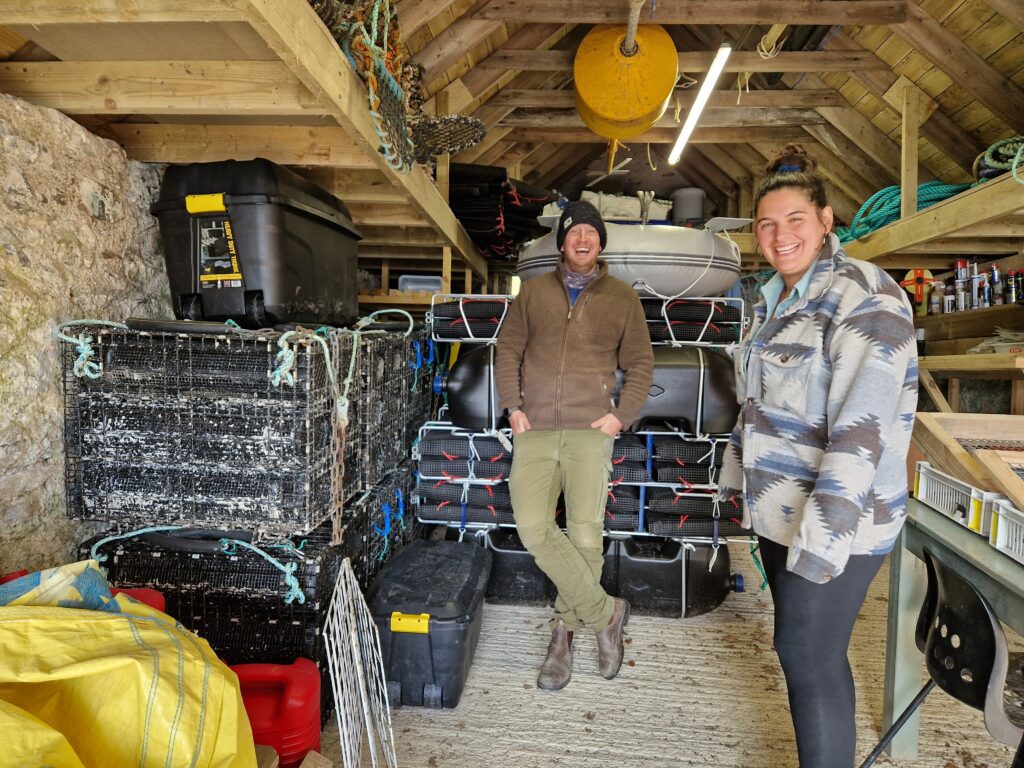
For groups such as Seawilding, COAST, CAOLAS and others across Scotland’s Coastal Communities Network (CCN) strong partnerships are essential. Connections with schools, local fishers, councils, researchers, national agencies and fellow community groups give them access to learning, resources and – crucially – local people power. These relationships strengthen their approaches, help them deliver their goals and allow their work to grow and evolve.
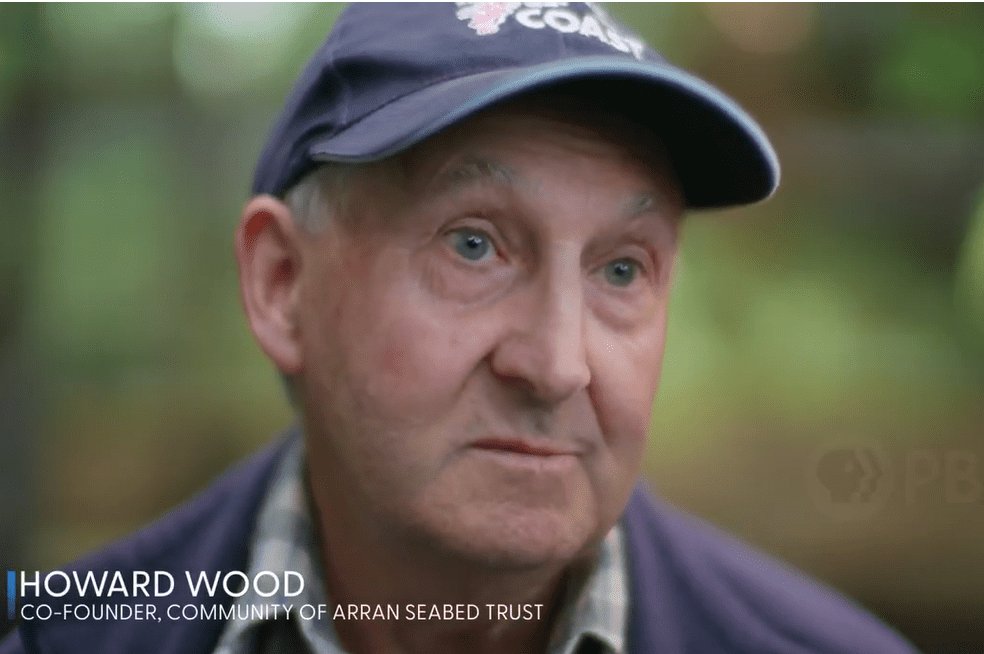
Watch this short film to learn more about COAST’s work to champion ocean recovery of the Isle of Arran.
Marine restoration moves more quickly, effectively and confidently when groups work together and have others walking alongside them.
And while the challenges are real – from limited resources and complex licensing processes to volunteer fatigue and unpredictable weather – tackling these challenges collectively makes them more manageable. When one group finds a way through, they help others do the same. Problems become shared, and solutions spread. It’s one of the greatest strengths of this sector.
Capacity building is essential
Effective community‑led marine restoration and protection doesn’t happen on good intentions alone. It needs time, coordination and steady hands
When local groups have support from skilled providers, everything strengthens. Volunteers feel supported rather than stretched; monitoring becomes consistent and reliable; communication improves; and planning becomes more realistic and long‑term.
Support from organisations like Fauna & Flora has played an important role here. Their approach is practical, steady and tailored to what each group needs – whether that’s governance advice, training, problem‑solving or simply helping people navigate complex processes.
Knowing there is someone to turn to with a quick question or for guidance or a sense-check makes projects feel less fragile and far more sustainable over the long term, and this kind of backing enables groups to run their projects well.
Read more about Scotland’s Coastal Communities Network (CCN).
Photo: CAOLAS
Local people and long‑lasting stewardship
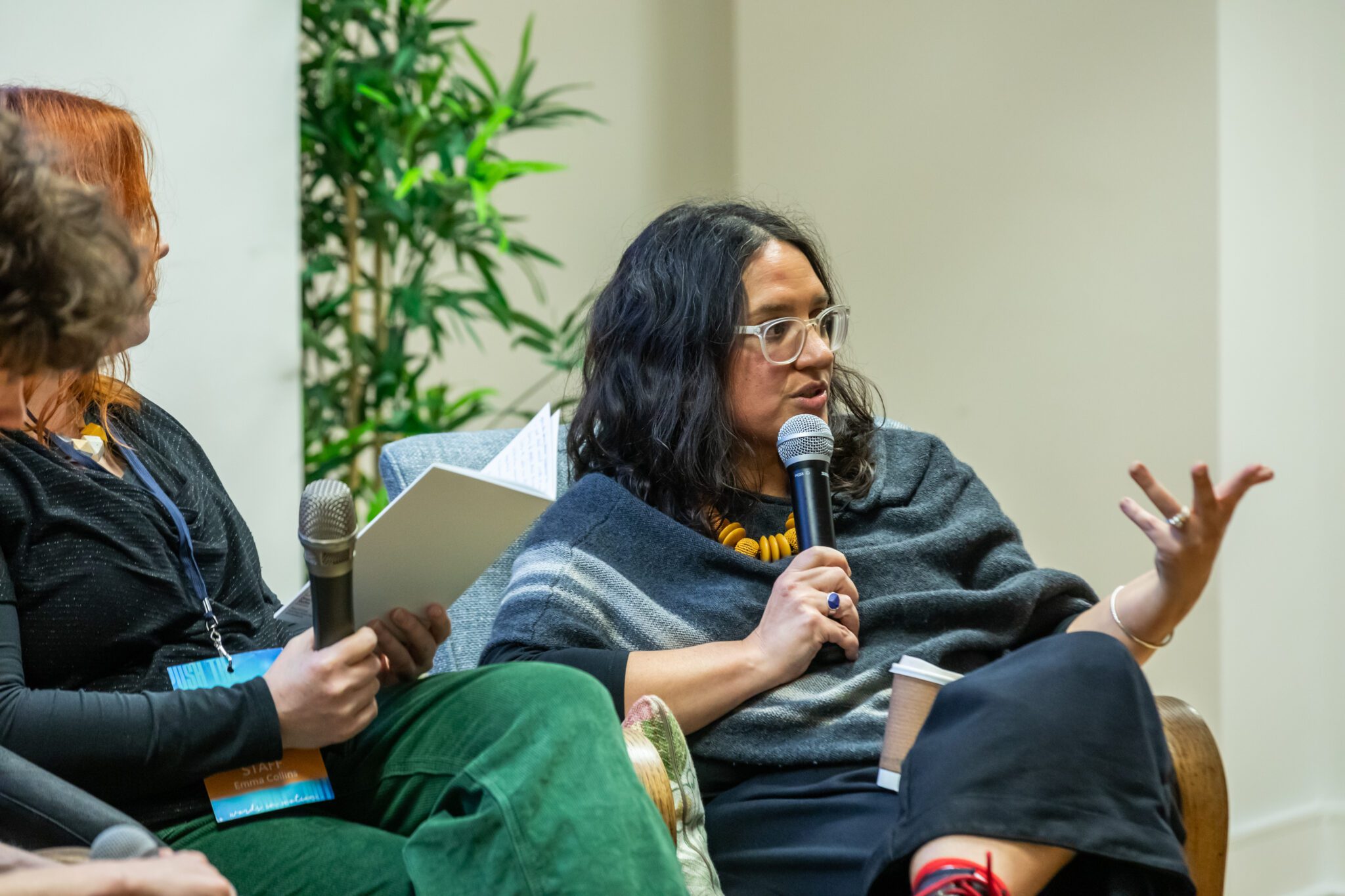
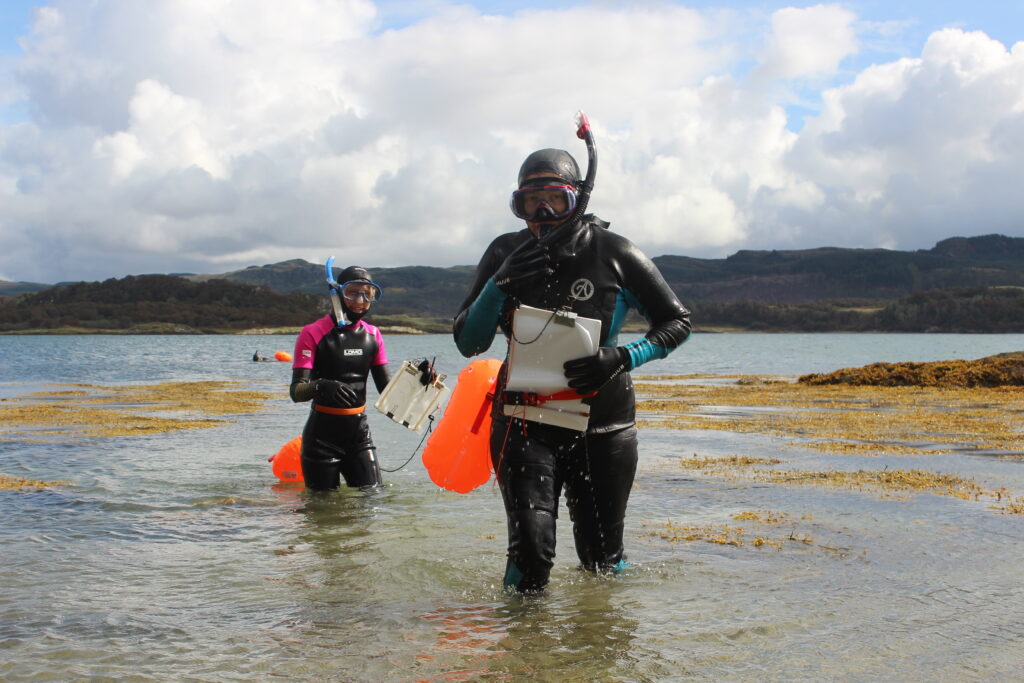
One of the most hopeful parts of this work is the depth of community involvement. Children measuring oysters in Ullapool. Volunteers in Arran spending weekends gathering species data. Residents in Morvern use underwater cameras to monitor underwater change. Local people turning out for events on beaches, at harbours, and in village halls.
This hands‑on involvement builds understanding, connection and pride. As people deepen their relationship with their coasts and waters, local momentum for conservation strengthens – and becomes more resilient over time.
Community‑generated data in Scotland’s marine evidence base
A few years ago, community‑collected marine data might have been seen as a “nice to have.” That’s no longer the case.
Thanks to the CCN’s work on a joined‑up approach to marine biodiversity monitoring – and with support from NatureScot – groups are now gathering high‑quality data from all around the coast. Crucially, that information now feeds into national databases and is being used to inform real decisions, from Marine Protected Areas (MPAs) management and restoration planning to national marine policy.
Everyday people are now contributing the evidence that shapes how Scotland manages its seas. It’s a powerful example of what becomes possible when communities are trusted and supported.
A confident, connected movement has emerged
Perhaps the most exciting shift is the rise of a coordinated, community‑led voice for Scotland’s seas. The Coastal Communities Network becoming an independent charity marks a major milestone. More than 30 local groups around our coastline now support one another, share skills, influence national conversations and champion community leadership in marine protection.
This is no longer a minor trend – it’s a growing movement, rooted in place, collaboration and long-term stewardship.