20 November 2025
Unusual public art in unexpected places: Aproxima.
William Grant Foundation
Key learnings:
- Creativity helps us engage with heritage in new ways, showing that historic places are not fixed in the past but continue to shape, and be shaped by, contemporary life.
- Multi-artform approaches, combining archaeology, storytelling, craft and design, demonstrate how collaboration across disciplines can create richer cultural experiences.
- Inclusive participation creates meaningful public art and contributes to place-making.
- Flexible, early funding and trust from a funder gives creative organisations like Aproxima the freedom to take risks, follow opportunities and build ambitious work that can attract strong collaborators and additional investment.
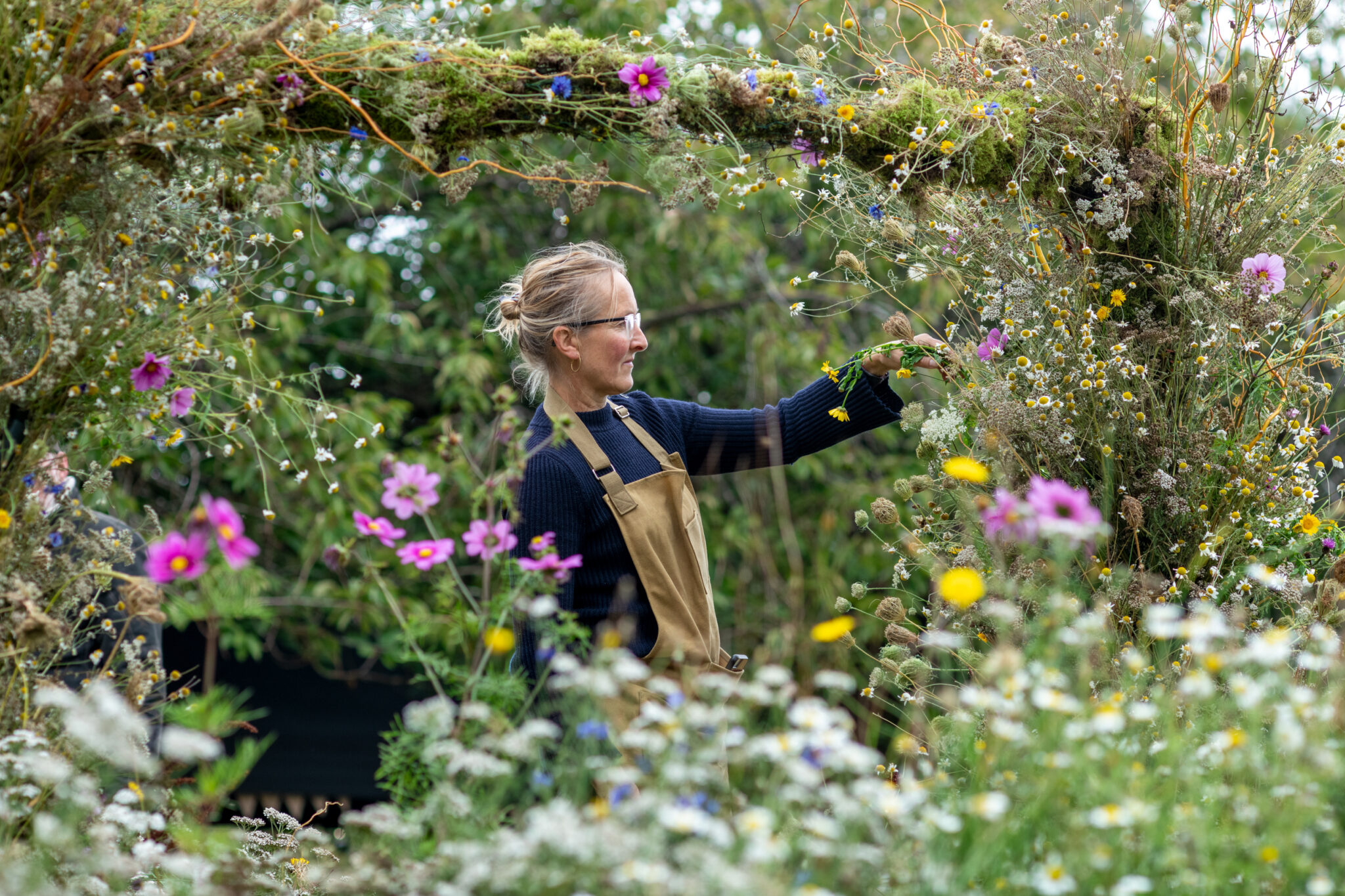
In a small, triangular plot of the Glasgow Necropolis, more than 8,000 people who once lay buried without ceremony, headstones or memorial are now commemorated through a living artwork – a quiet meadow shaped by hundreds of hands.
The project was guided by Aproxima – a Glasgow-based arts collective whose work unfolds in unexpected places. The organisation brings together artists, archaeologists, musicians, growers and volunteers to reimagine the city’s oldest stories and spaces.
Through our Scottish Culture and Heritage strand we are supporting Aproxima’s multi-year project Glasgow Requiem – an ambitious exploration of hidden histories, contemporary creativity and collective participation.
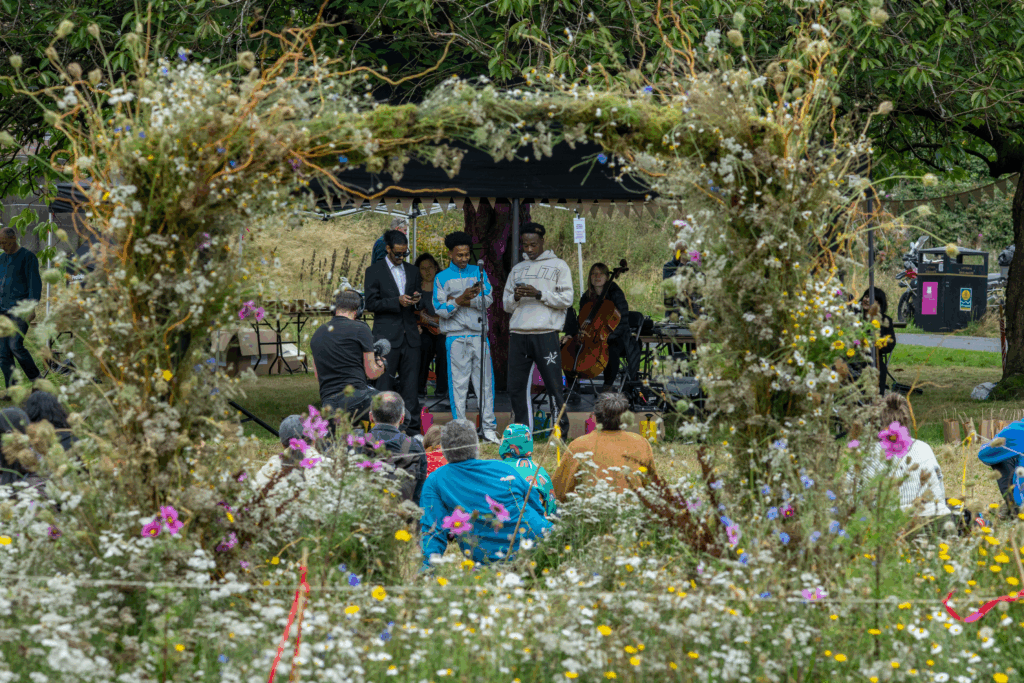
Glasgow Requiem is a five-year creative programme spanning community archaeology, horticultural design and other creative and imaginative responses to Glasgow’s mediaeval roots and pre-industrial history. Photo by Alaisdair Smith.
Reimagining heritage through creativity
The small but mighty team at Aproxima may punch above its weight with complex, high-quality projects, but their work is grounded in a simple belief: that through participatory and creative practice, it’s true that ‘People Make Glasgow’.
As Aproxima’s founder, Angus Farquhar, says,
“Glasgow isn’t just what it was, it’s what the people who are living here now make it.”
At the heart of Glasgow Requiem is a desire to make heritage more accessible. Rather than treat the past as fixed, Aproxima uses multi-artform approaches to bring new perspectives to our shared history.
The work reflects Angus’s long-standing approach of creating “unusual events in unusual places,” inviting people to encounter parts of Scotland they may have overlooked, forgotten or never known.
A meadow for the unmarked
The living memorial in the Glasgow Necropolis marks the burial place of some of the city’s forgotten poor, whose families, if they had any, could not afford to commemorate them.
Although some of those lives had been researched over the years, the land itself remained unacknowledged.
Through Glasgow Requiem, around 300 volunteers have planted and tended thousands of flowers, creating a sequence of snowdrops, bulbs and a summer wildflower meadow. The project has involved young and old and people from different backgrounds, including a group of young refugees now settled in the city. For Angus, this is a reminder that the act of taking part in a project like this is part of the public artwork itself.
The result is both a tribute and a contemporary piece of public art, shining a light on a hidden part of the city’s past, remembering those whose lives often went unseen, and celebrating everyone who is shaping the story of the city today.
Walking into history
Another strand of the project, The Walk, is an audio journey narrated by the Scottish actor, Gary Lewis. It leads listeners through the history of the area around Glasgow Cathedral, the Royal Infirmary and the Necropolis, uncovering amazing stories and little nooks and crannies that you don’t normally venture into, along with biographies of new Glaswegians and new arrivals who often lack visibility today.
Discover the hidden lives and stories of the city in an immersive audio journey through Glasgow.
The Walk is a reminder that heritage sits alongside contemporary lives, and that both deserve recognition. As Angus says:
“The Walk aims to inspire the idea of a city where we care for each other, where we make the future together and where we always keep working towards a better version of humanity.”
Returning to the city’s source
The latest phase of Glasgow Requiem focuses on a remarkable but little-known feature of the city’s imposing mediaeval cathedral: a 770-year-old well, described by a collaborator as ‘the wellspring of Glasgow.’
Despite its significance, it lay unmarked for centuries, with the coins and offerings at its base as the only sign of continued acknowledgement by those visiting or passing through the city.
Aproxima worked with archaeologists to excavate and clean the well and document the many objects found inside. A striking new illuminated sculptural circular artwork will sit permanently within the well shaft. It’s built with 957 handmade stained glass goldleaf plates from Venice and a unique cylindrical form constructed from the honeycomb aluminium sheets used to clad spacecraft.
Learn more about the The Well hidden deep within the Crypt of Glasgow Cathedral.
Photo by Chris Leslie
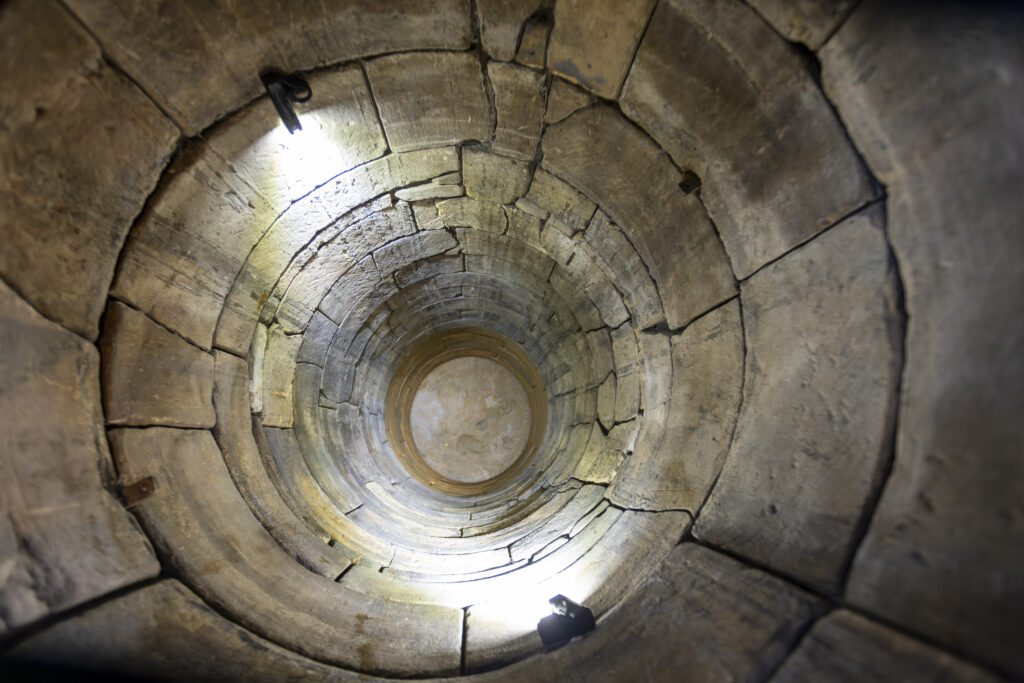
The remarkable artwork developed by the Aproxima creative team, and led by mosaic artist Joanna Kessel, will form a new reflective focus in the lower church.
Rededicating this extraordinary site as ‘Glasgow’s Wellspring’, The Well will encourage visitors to re-engage with this early chapter of the city’s history in a contemporary, accessible way.
This blend of artistic craftsmanship, technical expertise and archaeological care demonstrates the value of high-quality collaboration in cultural work. It also reflects the belief that Glasgow’s story belongs to everyone.
Why flexibility matters
The Foundation has supported Aproxima with flexible funding since its early days in 2019, giving the team the freedom to use our grant where it is most needed. Angus describes this early, flexible support as critical in providing the organisation with a solid base to build from and develop in a way that would have been difficult with only restricted project funding.
Reflecting on the importance of flexible support from a funder willing to take risks, Angus said:
“We felt trusted, and the funding itself generated trust – I’ve then been able to raise five times that money on the back of having that grant place, allowing us to shift and move the Foundation’s funding around as the project develops and grows.”
For a small organisation, this flexibility and trust is essential, and it enables them to build partnerships, respond to opportunities and follow the creative process without being constrained by prescriptive outputs. Angus believes that this freedom leads to public art that is more engaging, imaginative and impactful.
Looking ahead
In December, Aproxima will host a major concert in Glasgow Cathedral to mark the rededication of the well. The event will bring together choirs, musicians and performers for a collective moment of reflection and renewal during Glasgow’s 850th anniversary year.
With complex, collaborative projects like this, Aproxima shows how heritage, creativity and community participation can come together to connect Glasgow’s past to its present, as it continues to be shaped by all the people who call it home.
More information on concert tickets for Glasgow Requiem: The Well can be found here.