Looking under the bonnet
17 December 2025
Explore why investing in people, systems, and capabilities isn’t a luxury – it’s essential for charities to navigate change.
Mhairi Reid
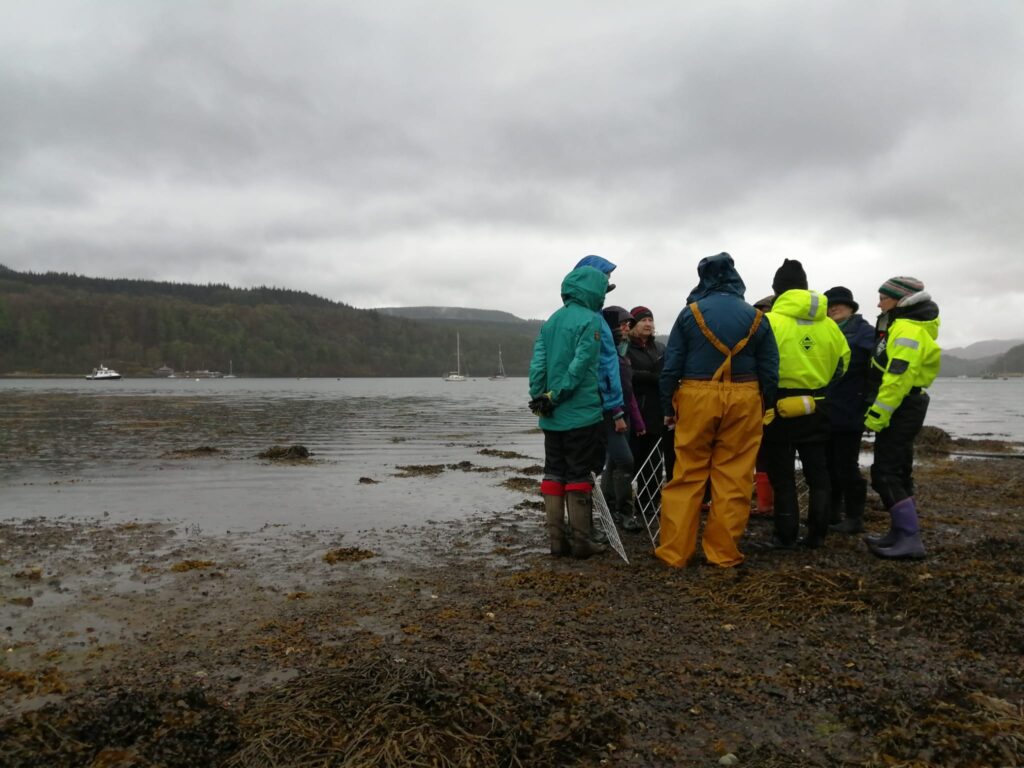
Photo: Community Association of Lochs and Sounds (CAOLAS) training day.
Organisational capacity building may not grab headlines, but it’s the engine that keeps charities moving. Over the past few months, I’ve been reminded just how critical this often-invisible work is.
From outputs to engines
Our most recent Foundation forum – a quarterly peer learning space for our grantees – focused on organisational capacity building. We explored everything from governance, finance and leadership to staff wellbeing, strategy, learning, and the ability to adapt and take risks.
The topic was an invitation to shift the lens: from what organisations deliver to what enables them to deliver it. That feels particularly urgent in today’s context for charities.
Why this matters now
Funding is increasingly uncertain. Workloads are high. Stress levels across the sector remain significant. At the same time, many organisations operate in complex – and sometimes hostile – environments.
Whether responding to the cost-of-living crisis, climate change, or the rise of far-right rhetoric that leaves communities feeling targeted or unsafe, charities are being asked to do more with less.
In these conditions, attending to an organisation’s people, systems and capabilities isn’t a luxury; it’s essential for wellbeing and navigating change.
Yet many charities still feel pressure from parts of the funding system to prioritise delivery over development, activity over reflection, and visible outputs over organisational strength. That makes it even more important for funders like us to talk openly about supporting organisations to be more resilient and effective in the future alongside funding their work today.
We’re also learning from peers who are giving this renewed attention. Esmée Fairbairn Foundation’s recent recommendations on funding wellbeing reinforces the message that looking after people is a core element of organisational resilience, not an optional add-on. Similarly, the US Centre for Effective Philanthropy’s recent article on ‘Beyond -the-Grant Support’ highlights how relational, flexible and caring forms of support can be as important as the funding itself.
Lessons from the frontline
At the Forum, these ideas came to life through the experiences shared by grantees.
- Fauna & Flora spoke about supporting community-based organisations to lead local and national conservation efforts. One major outcome has been the emergence of the Coastal Communities Network, connecting local groups to share knowledge, build expertise and influence national policy on safeguarding Scotland’s coastal and marine environments. The network both builds the capacity of its members and amplifies their collective impact.
- That theme was echoed by the Community Association of Lochs and Sounds (CAOLAS). They described their development from a reactive, volunteer-run group to a strategic community organisation with national influence. Investment in skills, systems and outreach allowed them to expand membership, strengthen partnerships, and connect local work to national policy.
- Portgordon Community Trust offered a different but equally important perspective. As a small organisation with a very small staff team, they spoke candidly about the pressures of “holding everything” – governance, service delivery, building management and community engagement – often with very little breathing space. Flexible funding allowed them to lift their gaze from the immediate to the long term and tap into the wider ecosystem around them to strengthen governance, develop skills and plan strategically.
Across these stories, it’s clear to see how relatively small, well-placed investments in capacity can be transformative when accompanied by collaboration, trust, flexibility and a relational approach.

The community garden at Portgordon Community Trust is run and designed by the community.
More freedom and honest conversations
We often hear from funded partners about the importance of flexible funding and taking a relational approach when it comes to building capacity. Being “freed up” by unrestricted funding rather than restricted grants tied to project delivery allows organisations to develop staff, take thoughtful risks, and invest in their future rather than constantly reacting to immediate pressures.
Equally, we know that a funder’s staff being available to funded partners – simply being there to talk things through and offer honest, human feedback – is valued. This kind of relationship isn’t always labelled as capacity building, but it plays a crucial role in developing confidence, clarity, and the ability to course-correct when needed.
More freedom and honest conversations
What we’re learning through these conversations is shaping our evolving Funder Plus offer (i.e. support beyond the grant) – from facilitating peer connection to targeted bursaries to strengthen charities.
Our aim is to: listen carefully, respond flexibly when we can, and build partnerships rooted in trust. Because when organisations have the capacity to thrive, their communities do too.