1 October 2026
In the first of a three-part series, we share our thinking on regenerative funding and why the way we fund matters.
Nick Addington

Photo: Tending to the wildflower memorial created by Aproxima (credit: Alaisdair Smith).
What does it mean to fund in a regenerative way? This is a question we’ve begun exploring at the William Grant Foundation. We’ve even written it into our Theory of Change, which sets out an ambition to “fund regeneratively in an open and trusting way”.
The term “regenerative” alludes to the ecological idea of regeneration as the capacity of living systems not simply to persist, but to restore and renew themselves in a dynamic way: to replenish what has been depleted, adapt to changing conditions and tend toward the balance of relationships and resources that enables life to flourish.
For some, thinking about regenerative philanthropy means exploring philanthropy’s wider role in society, including questions about where power sits, how it’s exercised, and how philanthropy can contribute to social, economic and environmental transformation.
As a smaller, family-led funder with relatively conventional charitable interests, our starting point is a narrower, practical question: however a foundation is governed and whatever causes it chooses to support, can it carry out its role in ways that are more, or less, regenerative?
This blog aims to explain what we mean by that and why we think that matters. In two further blogs, I’ll talk about what we think it means in practice and give some examples of first steps we’ve taken towards trying to work more in this way.
Civil society as an ecosystem
Fundamentally, our interest in this concept of regenerative practice arises from how we see our relationship with the organisations and fields we fund.
That starts with viewing civil society – the people and organisations within it, the relationships between them, and the conditions they operate under – as a system. And recognising that civil society’s efforts to make the world better, fairer and more sustainable involve multiple complex interactions with other systems such as public services, local economies and government.
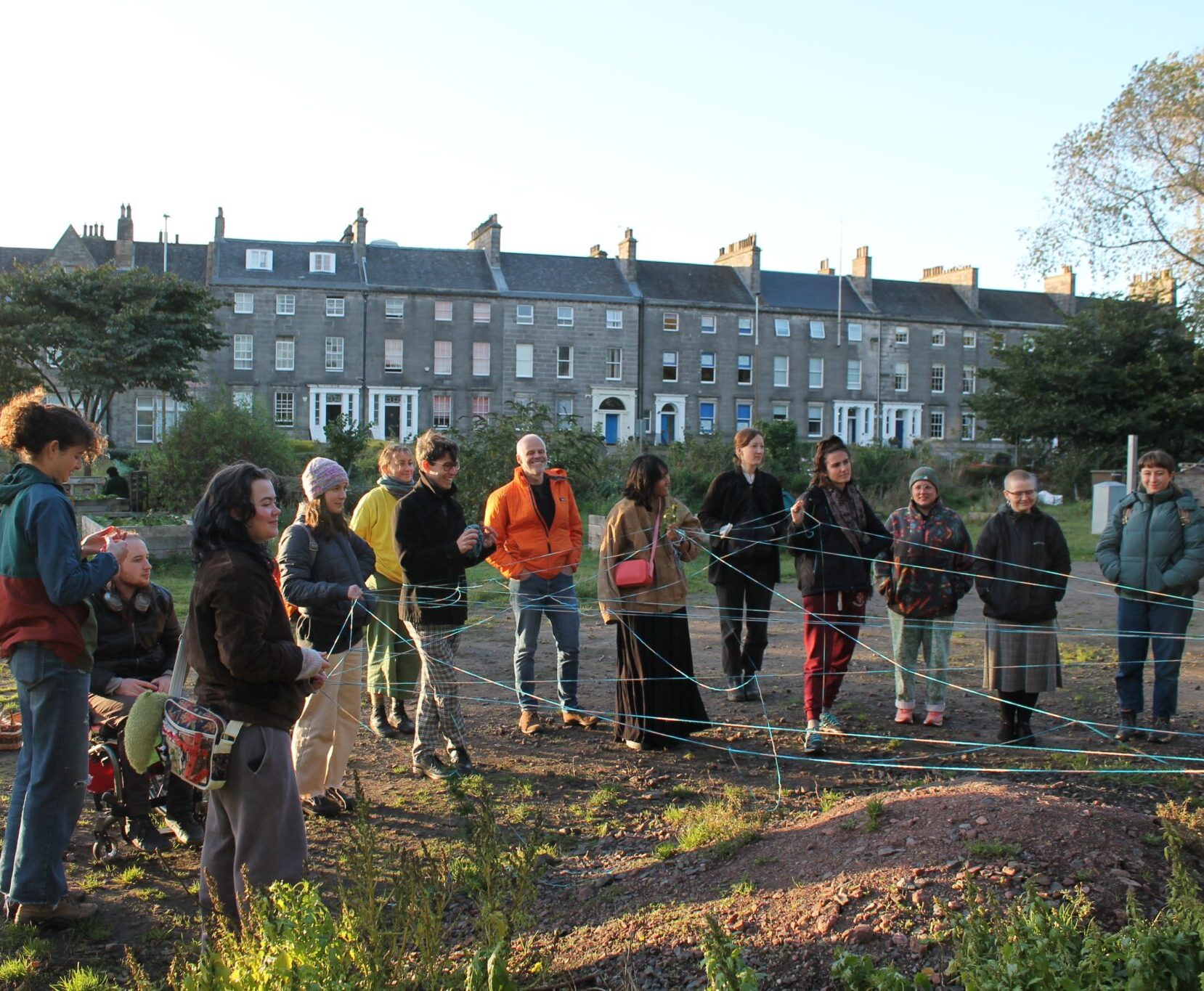
Photo: Culture for Climate Scotland
This view recognises that positive social or environmental outcomes rarely arise through the actions of a single organisation alone. Rather, they emerge from a complex interaction of many different actors, influences and interventions over time.
For funders, this matters because the outcomes we care about depend not only on individual organisations succeeding, but on the wider civil society system having the capacity to generate, spread and sustain positive change. Strong organisations matter, but so do the relationships, networks, knowledge, trust and infrastructure that connect them. When these wider conditions deteriorate, progress becomes harder regardless of how effective any single organisation may be.
Applying an ecological metaphor, we can think of civil society as an ecosystem comprising an ecology of organisations, people, communities, networks, knowledge, infrastructure and relationships. Like any ecosystem, it can become depleted and fragile, or healthy and thriving.
Most funders recognise that lasting impact depends on the organisations they’re funding being sustainable and resilient. Regenerative funding extends that same logic beyond individual organisations to the wider civil society ecosystem.
We’re not outside the system
If we accept that outcomes depend on the health of the wider ecosystem, it becomes important to understand how funders themselves interact with that system.
It’s tempting to picture philanthropy as a one-way flow of resources from outside civil society into it: Foundations have money; charities and communities need resources; we transfer money to them, enabling more good things to happen.
There is obviously truth in that. But it can obscure something important: funders are themselves participants in the system they seek to support.
We don’t just add resources to that system, we draw upon resources already within it. Funders’ programmes rely on the capacity and readiness of the field to participate in them, and our processes consume applicants’ time and effort, whether or not a grant is awarded.
And because our money gives us power and influence, we can also affect how the system behaves.
Aproxima’s Glasgow Requiem project. Photo credit: Alaisdair Smith

Every grant creates new relationships with obligations and commitments. It affects risks and opportunities and how they’re distributed. And it sends a signal to the field.
Furthermore:
- How we determine who and what to fund can encourage competition or collaboration.
- Our priorities create incentives for organisations to align their activities with our interests.
- Our funding conditions shape behaviour.
- Our reporting requirements redirect attention.
- Our evaluation frameworks influence what gets measured, valued and learned.
Even the language funders use can shape how a field understands and frames its challenges and the possibilities for addressing them.
These effects aren’t necessarily large in isolation, especially for relatively small funders like us. But funders tend to have a disproportionate gravitational pull. Organisations understandably pay attention to where resources are flowing and adapt accordingly.
So, grant-making is never a neutral one-way injection of resources; it is always an exchange and an intervention within a wider system. And collectively, funders have a significant impact on system dynamics.
It’s about more than money
A grant provides income. But money coming in is only one of the resources that civil society relies on to work effectively.
It also depends on resources that have accumulated over time: knowledge and evidence, financial reserves, trusted relationships, skilled and experienced people, robust governance, effective leadership, volunteer commitment, community legitimacy, collaborative networks and shared infrastructure.
These resources take time to build but can be easily depleted.
It’s important to understand that the effects of funding are not always straightforward, and adding money to a system doesn’t necessarily make the overall effect positive.
A grant may support valuable work while simultaneously redirecting attention from other priorities or weakening a recipient’s autonomy and flexibility, shifting accountability, creating financial risk or discouraging collaboration.
An organisation can successfully deliver a funded project while ending the grant with exhausted staff, lower reserves and less capacity to adapt for what’s needed next.
This doesn’t mean every funder-imposed restriction or requirement is unreasonable. Accountability matters and trade-offs are inevitable. But it does challenge the assumption that because philanthropy injects resources into an organisation, a field or community, its effects must necessarily be entirely positive.
If the outcomes we seek depend partly on the health of the wider ecosystem, then we need to account not only for the benefits our funding creates, but for the aggregate effects of what we contribute, what we draw upon, and how our influence shapes the system around us.
We also need to recognise that decisions about funding and how it is managed not only affect what happens in a field, community or place, but can alter the conditions that determine what else happens at the same time and in the future, leaving people and organisations stronger, better connected and more resilient, or weaker and less well prepared for what comes next.
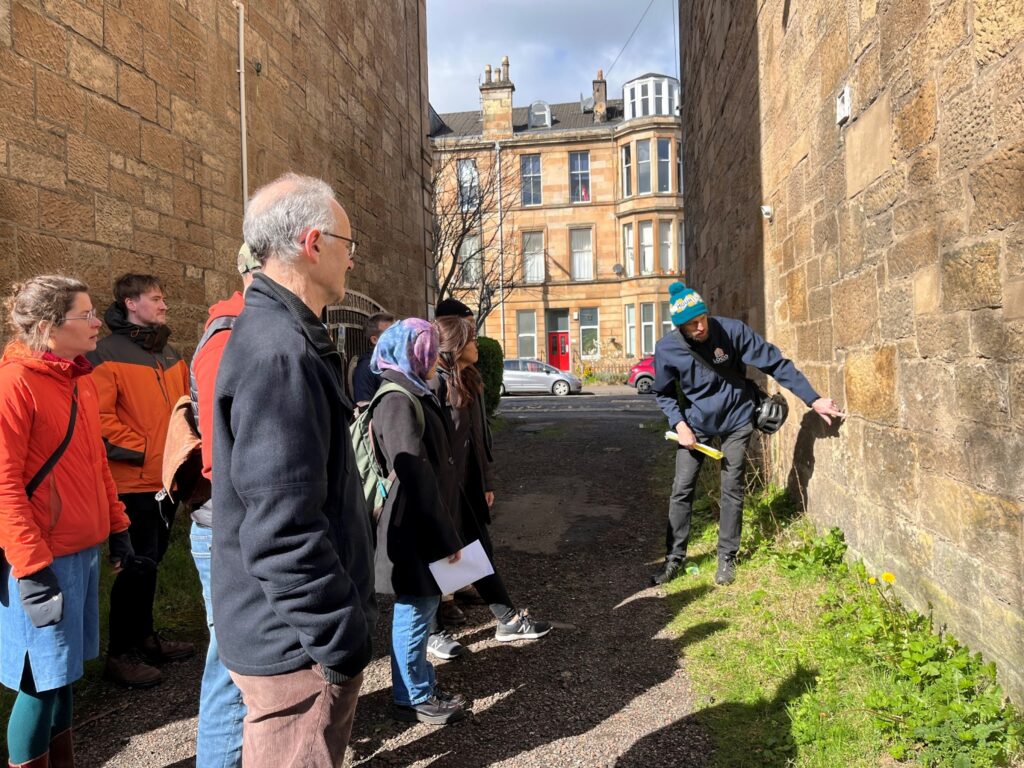
Photo: Loco Home Retrofit
A working definition
Here we can see parallels with how natural ecosystems can regenerate or degenerate over time, depending on whether the conditions that govern them encourage renewal, new growth, adaptation and abundance, or cause erosion, depletion and the suppression of growth and diversity.
What would it take to nurture the conditions that support organisations, fields and wider civil society to adapt and thrive over time, and what role could we as funders play?
This is where the idea of regenerative funding comes from, and leads us to this working definition:
Funding in a regenerative way means using our resources, relationships and behaviour not only to advance our aims, but also to nurture the conditions that promote the long-term health, resilience and capacity of people, organisations and the systems we are part of.
We think this is worth aiming for because the positive outcomes we want to contribute to through our philanthropy depend on the long-term vitality of the organisations doing the work and the ecosystem that enables, connects, amplifies and sustains their impact.
In my next blog, I’ll talk about how we see this having implications for funding and funding processes.